


 Client Login

Property Condition Assessments: The Name That Has Set The Standard For over 27 Years.
PCA’s construction consulting practice provides plan and cost reviews, monthly construction draw inspections, final completion inspections, and broader construction monitoring services for commercial real estate lenders, developers, equity investors, and owners. PCA’s construction services support construction-loan underwriting, ongoing loan administration, and post-completion lien-release decisions across every major commercial property type — multifamily, office, industrial, retail, mixed-use, hospitality, healthcare, and self-storage.
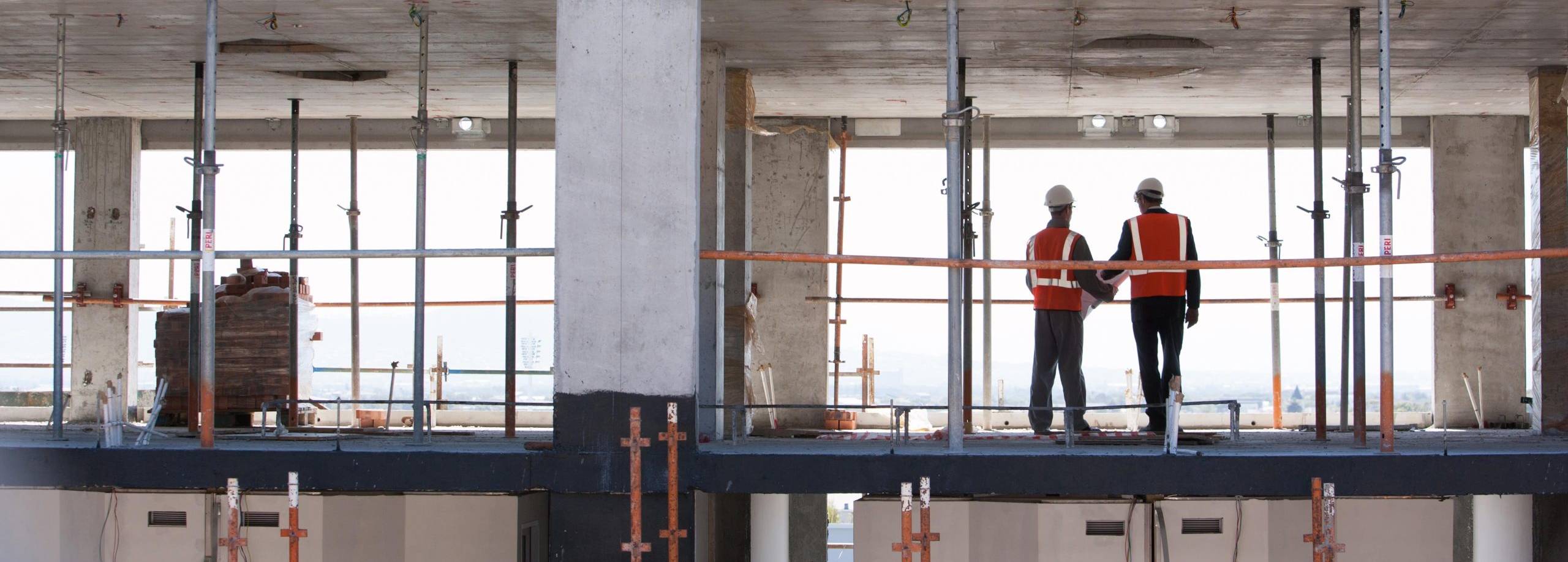
Construction monitoring is the structured third-party review of a commercial construction project performed throughout the construction loan term. It exists to give the lender (and other interested parties — equity investors, joint-venture partners, takeout lenders) confidence that loan proceeds are being applied to actual completed work, that the budget is on track, that the schedule is realistic, and that the eventual completed building will match what was underwritten at loan closing.
PCA’s construction monitoring engagement typically runs in three phases that correspond to the construction loan lifecycle: a pre-construction plan and cost review at loan closing, monthly draw inspections during construction, and a final completion inspection at substantial completion.
Before the construction loan closes, PCA conducts a Plan and Cost Review (PCR) of the proposed project. The review evaluates whether the construction documents, project budget, contractor qualifications, and project schedule support the proposed loan structure. Specifically, PCR scope addresses:
The PCR deliverable is a written report the lender uses to confirm the loan is appropriately sized and structured before funds are committed.
During construction, PCA performs monthly draw inspections to verify the contractor’s monthly Application for Payment before the lender funds the draw. Draw inspection scope includes:
The draw inspection report is delivered to the lender within a few business days of each site visit, supporting the lender’s funding decision on each monthly draw.
At substantial completion, PCA performs a final completion inspection to confirm the project has been built to the construction documents, that the certificate of occupancy is in place (or imminent), and that retainage release is appropriate. The final inspection supports the lender’s decision to release the final loan funds and, often, supports the conversion of the construction loan to permanent financing.
Beyond the three-phase construction monitoring engagement, PCA delivers additional construction consulting services as standalone scopes:
Construction monitoring engagements run for the full construction loan term — typically 12 to 24 months for multifamily construction, longer for larger commercial projects. The pre-construction Plan and Cost Review is typically completed within 2 to 3 weeks of receiving the construction documents. Monthly draw inspections run on the lender’s funding calendar — usually one site visit and report per month per project. The final completion inspection is scheduled when the contractor signals substantial completion.
Standalone scopes (Plan and Cost Review only, or a single special-purpose inspection) are scheduled and priced individually. Pricing is engagement-specific; PCA does not publish a rate sheet.
PCA has performed commercial construction consulting for lenders, developers, and investors nationwide since 1997. PCA’s construction practice has supported construction loans for every major commercial property type and every project size from single-asset multifamily and retail to large-format mixed-use developments. Construction monitors are licensed architects and engineers with direct relevant construction experience. PCA operates from a single national operations center in Brea, California, which means consistent reporting format and turnaround across every engagement regardless of where the project is being built.
Who are PCA’s construction monitoring clients — lenders, developers, or both?
Both, but the engagement structure matters. The most common arrangement is the lender retains PCA directly to monitor the project; the developer pays through a closing-cost line item. PCA’s reporting obligation is to the lender, not the developer. PCA also performs owner’s representative work for developers and equity investors as a separate engagement type with a different reporting relationship.
Can you start mid-project if construction is already underway?
Yes. PCA frequently picks up draw monitoring mid-project when a lender replaces a prior monitor, when a project is acquired by a new owner mid-build, or when a syndication partner is added to the construction loan. The initial mid-project engagement typically includes a catch-up review of prior draws to establish a baseline before regular monthly monitoring begins.
Do you provide construction cost estimates?
PCA provides opinions of probable cost as part of the Plan and Cost Review and as part of change order analysis during draw monitoring. PCA does not provide formal pre-bid cost estimates of the kind that compete with construction cost-estimating firms — that’s a different discipline. The opinions of probable cost PCA delivers are for budget validation and lender-decision purposes, not for tendering or contractor procurement.
What happens when a project goes over budget mid-construction?
PCA’s draw inspection reports flag budget overruns as they emerge, well before they become funding gaps. The decisions about how to handle an overrun — additional equity contribution, contractor concessions, value engineering, scope reduction — belong to the lender, developer, and equity stakeholders. PCA’s role is to surface the issue early and document the trade-offs, not to make the funding decision.
Do you do commissioning?
PCA coordinates with commissioning agents and can include commissioning verification in the final completion inspection. Building commissioning itself — the testing, balancing, and verification of mechanical, electrical, and control systems — is typically performed by specialized commissioning providers. PCA’s construction practice integrates with commissioning where the project requires it.
For general questions about working with PCA — pricing, report timelines, vendor selection — see PCA’s main FAQ.
Ready to scope a construction monitoring engagement? Submit your project scope for a custom engagement quote. PCA responds to quote requests within one business day.